
Stayers vs Sprinters — Greyhound Distance Betting
 Available in US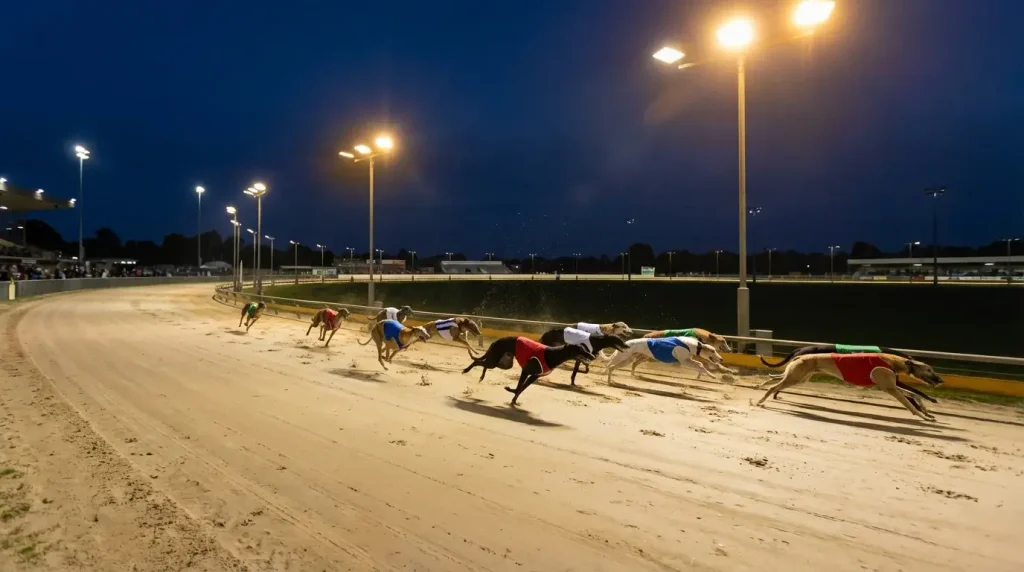
The Distance Changes the Race
A greyhound race over 270 metres and a greyhound race over 660 metres are not the same sport. The distances might share a track, a trap system, and a set of betting markets, but the tactical demands, the physical attributes that matter, and the way the race unfolds are fundamentally different. A sprinter that dominates over 270 metres might finish last over 660. A stayer that grinds down opponents over a long trip has nothing to offer in a race that is over before the second bend.
Most UK greyhound racing takes place at the standard distance — roughly 480 metres, or the traditional “525 yards” that became the sport’s benchmark distance. But sprints and staying races appear regularly on the card, and they require a different betting approach. The form factors that predict the winner change with the distance. Trap draw matters more in sprints. Stamina and running style matter more in stays. The standard distance sits in between, demanding a blend of both.
If you bet across different distances without adjusting your analysis, you are applying the wrong model to the race in front of you. This guide covers how each distance category works and what to look for before placing a bet.
Sprint Races — Sub-400m Dynamics
Sprint races — typically 260m to 300m — are the purest test of early speed in greyhound racing. The race is over in less than seventeen seconds. There is one bend, or sometimes no bend at all on straight-course sprints. The traps open, the dogs explode forward, and the first dog to reach the bend — or the finish line — wins. There is no time for tactical manoeuvring, no opportunity for a closer to make up ground, and almost no margin for error out of the traps.
This compression of the race into a single explosive effort makes trap draw the dominant factor in sprint betting. The dog in trap 1 or trap 2, with the shortest run to the rail and the bend, has a structural advantage that is larger in sprints than at any other distance. At tight tracks like Romford and Crayford, inside-drawn sprinters win at rates that far exceed the baseline expectation. A dog with fast early pace drawn in trap 1 for a 270m sprint at one of these tracks is often the strongest selection on the entire card.
Form analysis in sprints focuses almost entirely on the first-sectional time. How quickly does the dog break from the traps? How fast does it reach the first timing point? A dog with consistently fast first-sectionals is a natural sprinter — its speed out of the box determines the race. Dogs with slow first-sectionals, even if they have strong finishing speed, are poor sprint prospects because the race does not last long enough for their strengths to come into play.
Weight is more relevant in sprints than at other distances. Lighter, leaner dogs tend to accelerate faster from a standing start, which gives them the split-second advantage that decides a 270m race. Heavier dogs may have more sustained power but cannot match the initial burst of a lighter sprinter. If two dogs have similar early-pace records, the lighter one is often the better sprint bet.
Forecast and tricast betting on sprints is particularly challenging. The race unfolds so quickly, and the first-bend dynamics are so influential, that a single bump or check can reshuffle the entire finishing order. Sprint forecasts are low-probability bets even by forecast standards. If you do bet forecasts on sprints, favour inside-drawn pairs and keep stakes small.
Standard Distance — The 525-Yard Core
The standard distance — approximately 480m, historically measured as 525 yards — is the heartbeat of UK greyhound racing. The vast majority of races at every track, across all grades and meeting types, are run at this distance. It is the distance around which the grading system is calibrated, the distance at which most form data is recorded, and the distance that produces the most competitive and analysable racing.
Standard-distance races demand a blend of early speed and sustained pace. The dogs complete four bends and two straights, with the race lasting roughly 29 to 31 seconds depending on the track and conditions. Unlike sprints, the standard distance gives the race time to develop: the opening burst from the traps determines the first-bend order, but the remaining distance allows closers to make up ground, front-runners to tire, and positional battles to play out through the second and third bends.
At this distance, all three analytical pillars — form, trap draw, and running style — carry roughly equal weight. A fast-breaking dog in an inside trap is a strong prospect but not an automatic winner, because a closer with superior stamina can reel it in over the final straight. The balance between pace and endurance is what makes standard-distance racing the richest betting medium in the sport. The best dog does not always win. The dog that runs the best race — given the pace scenario, the bend positions, and the draw — wins.
Form comparison is most reliable at this distance because the sample sizes are largest. A dog’s last six runs are overwhelmingly likely to have been at standard distance, which means the form figures are directly comparable. Speed ratings, sectional times, and comments in running are all calibrated for the standard trip. If you are going to specialise in one distance for your betting, this is the one — the data is deepest and the analytical methods are most refined.
Staying Races — 600m and Beyond
Staying races — typically 600m to 700m, with some tracks offering even longer trips — are the marathon of greyhound racing. The dogs complete six or more bends, race for 35 to 40 seconds, and cover ground that exposes any weakness in stamina, fitness, or tactical intelligence. These races reward endurance over acceleration, and the characteristics that predict a staying winner are distinct from those that predict a sprint or standard-distance winner.
The first-bend premium diminishes in staying races. Over six bends, the initial positional advantage of an inside draw is diluted — there are more bends for positions to change, more straights for closers to gain ground, and more distance for the race to settle into its natural order. Trap draw still matters, but it is less decisive than in sprints or even standard-distance races. A dog drawn in trap 5 or 6 has time to work its way into contention, provided it has the stamina to sustain its effort.
Running style becomes the dominant factor. Staying races are won by dogs that manage their energy efficiently — running at a controlled pace through the early bends and accelerating in the closing stages. Front-runners that burn energy early often tire over the final two bends and are caught by closers with superior reserves. The ideal staying profile is a dog that sits just off the early pace, moves into contention at the midpoint, and finishes strongest when the leaders are fading.
Form at the staying distance is essential. A dog’s standard-distance form is only partially transferable to staying trips. Some dogs handle the extra distance naturally — they have the physical build and the temperament to maintain speed over a longer trip. Others fade badly beyond 500m, regardless of how good their standard-distance form looks. Always check whether a dog has staying form before backing it over 600m or further. A first-time stayer is a risk, even if it is a proven winner at 480m.
Staying races also produce different market dynamics. The fields are often smaller in quality terms — fewer dogs are genuine stayers — which can create either dominant favourites or wide-open races depending on the entry. Forecast dividends in staying races can be generous because the finishing order is less predictable than in standard-distance graded races. The extra distance gives more dogs a chance to be involved in the finish, which means the top two and top three positions are contested more closely.
Distance Shapes Everything
The racecard tells you the distance. That single number — 270m, 480m, 660m — should reshape your entire analysis before you look at anything else. At 270m, the race belongs to the fastest starter in the best trap. At 480m, the race belongs to the dog that best combines speed, position, and stamina. At 660m, the race belongs to the dog that manages its energy and finishes strongest.
Applying the same analytical model across all distances is a common mistake. Bettors who back inside-drawn front-runners in staying races, or who expect closers to come from behind in sprints, are fighting the physics of the distance. The distance shapes the race, the race shape determines the winner, and your analysis needs to start from that foundation.
Check the distance first. Then check everything else.
Get more race analysis at greyhoundlivestream.
Also read our greyhound racing grades explained.
